The 3 Main Cloud Models
Date: 19/03/2025
Digitisation of documents and automation of processes has been ongoing in the private and public sector for some years now. But there has been a notable emphasis and acceleration in these transitions of late.
I have in mind some of the UK PM’s announcements to fulfill this in the civil service, in the taking on of quangos, and the very recent abolition of NHS England - the administrative and commissioning body of the NHS. Across the pond, DOGE is doing the same with a growing squadron that began with six high achieving and highly innovative 19 - 25 year olds.
A big part of this process involves the migration of a company’s or organisation’s IT from On-Premises to “the Cloud”.
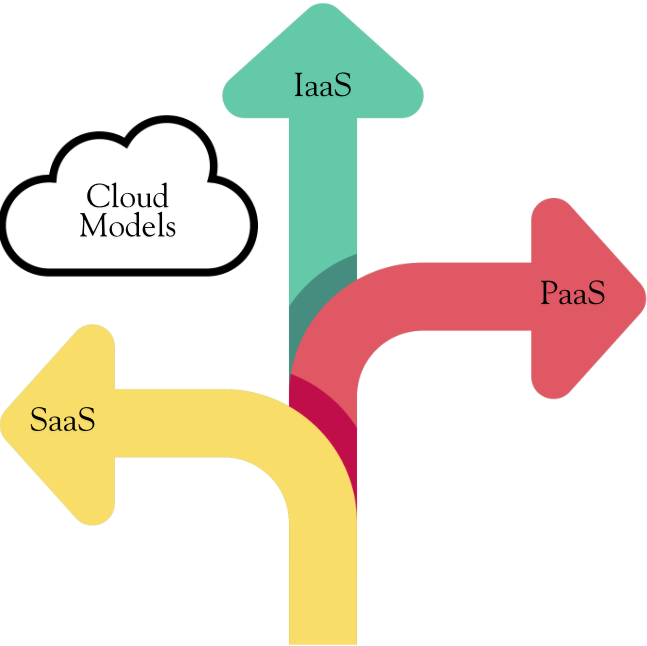
This can basically be achieved with three models, but it’s worth noting, that there is the hybrid setup as well, whereby you retain some aspects of your IT on premises but you also leverage a Cloud Platform Service.
Some organisations choose to use more than one Cloud Platform Service, so it may be worth considering if for example, two specific services your organisation needs are not provided by the same platform.
Of course, the model that you choose will be based on what works best for your team/organisation, here’s a breakdown with examples in the field of bioinformatics, but note that this is applicable to all fields of work that use IT:
1. Infrastructure as a Service (IaaS)
IaaS grants you maximum flexibility and control over your IT resources like storage, choice of Operating System (OS), Compute, Network configuration and Security.
So, with that control, comes the responsibility of architecting the system in which your bioinformatics pipeline or web app runs, provisioning the IT resources as and when you need to analyse data or as end users visit and use your web app.
To do well with IaaS you need to invest time in understanding how to architect your cloud solution, secure it, automate its provision with Infrastructure as Code (IaC), make it reliable with contingencies in place that can promptly mitigate failure to deliver and run resources and more. Or you’ll need to invest in expertise!
Examples of IaaS include: AWS, Microsoft Azure and Google Cloud Platform.
2. Platform as a Service (PaaS)
With PaaS you don’t need to worry about managing underlying infrastructure like the OS and Compute capacity. Most PaaS providers require your pipeline to be packaged in a workflow language like Nextflow.
Examples of PaaS companies and offerings include: AWS HealthOmics, DNAnexus, Seqera and Illumina BaseSpace Sequence Hub.
3. Software as a Service (SaaS)
SaaS is essentially a Plug and Play cloud computing model. Think of your mobile phone apps. For example, you upload your photos to the app and they get modified in some way, or you upload your FASTQ files and await BAM and VCF files after analysis is complete. Many of the companies that are listed as PaaS cloud solutions could also be listed as SaaS because of the differing levels of control that you can choose to purchase.
Examples SaaS include: Galaxy, Terra, Lifebit CloudOS.
Author: Dolapo Ajayi BSc MSc